Is this love or convenience? The Gendered labour of loving in Love in the Time of Cholera
“Neither could have said if their mutual dependence was based on love or convenience, but they had never asked the question with their hands on their hearts because both had always preferred not to know the answer” (p. 26)*
Anyone familiar with the everyday trivialities and quiet resentments of married life will smile in recognition at the soap incident in Love in the Time of Cholera. The incident itself seems trivial. It is night-time, and Dr Urbino emerges from the bathroom, dressing in the dark. Aware that his wife is not yet asleep, despite her closed eyes and habitual sleeping posture, he makes a deliberate show of rustling the starched sheets before muttering, more to be overheard than to himself: “I’ve been bathing for almost a week without any soap.” Fermina’s fury at being caught at fault and also at her husband’s exaggeration to augment her guilt (it had been three days and not a full week) results in her full denial of responsibility. “Well, I’ve bathed every day,” she shouts, beside herself with rage, “and there’s always been soap” (p. 28).
The incident takes ridiculous proportions over the next three months, with Urbino leaving the house to stay at his club for a few weeks, then returning to the house but sleeping in another bedroom. The two refuse to speak to one another, instead using their children to pass messages back and forth. He goes as far as suggesting consulting the Archbishop, so that God can settle the matter once and for all: was there soap or wasn’t there? The sheer absurdity of bringing the Archbishop (and God) into a dispute over a missing bar of soap is almost comical, and Fermina’s exasperated response makes it even more so: “To hell with the Archbishop”, she curses, a remark that, we are told, “shook the very foundations of the city” (p. 29). In the end, Urbino capitulates, unable to bear being without the comfort of his own bed, and falsely admits that there was, in fact, soap.

I’ll discuss the importance of soap and hygiene in relation to Dr. Urbino in another article. Here I’m more interested in what the soap reveals about the nature of Fermina and Urbino’s relationship: What is the narrative function of the incident? Why is it given so much space in the story? What insight does it give us into their character and their marriage? And why does Fermina’s omission to replace the soap take such epic proportions? I’d like to consider all this in light of a larger question: what is the importance of the trivial everyday details of married life —the miseries but also the small gestures of love? And to what extend are these every day acts shaped by gender?

I recently watched an interesting video on YouTube about the nature of love and the underlying misogyny of grand romantic gestures (spoiler: grand romantic gestures are a manifestation of male entitlement and narcissism but unfortunately have become normalised by popular culture as romantic). The video mentioned a study by the Open University in the UK, according to which small everyday acts of kindness rank higher as indicators of happiness in a relationship than large romantic gestures, which can often feel devoid of real meaning and genuine emotion. Offering someone a cup of tea ranked highest (which brought forth a triumphant “Aha! I told you so!” moment by my British husband), but the broader takeaway was that love is built through listening and showing love and affection in small ways day after day.
So, how can we know that we actually love someone – or that someone loves us? Is it a Hollywood style bolt of lightening, a surge of endorphins flooding our brain, or something much less cinematic and grand, a feeling of affection and safety built through small acts of care overtime?

As I was contemplating this question, I remembered a scene from the movie Fiddler on the Roof. Bewildered by his daughter decision to marry for love, Tevye turns to Golde, his wife of twenty-five years, and asks her if she loves him. Golde is stunned. She dismisses his question as a symptom of exhaustion—or perhaps indigestion—and sends him off to lie down, while she carries on with her chores. After all, she spent twenty-five years washing his clothes, cooking his meals, cleaning his house, giving him children & milking the cow. “Why talk about love now?” she asks. “You’re a fool!”. But Tevye won’t let the question go. He takes her back to the day they were married, which was the first time they saw each other. He remembers being scared; Golde remembers being shy. “So was I,” he says.
Something shifts as Golde remembers herself as that young, nervous bride. Emotion appears in her eyes and her heart softens. Tevye remembers that his parents had told him they would learn to love each other. So, he asks again: “Do you love me?” Golde turns away from him and, for the first time, allows herself to consider the question:
Do I love him?
For twenty-five years I’ve lived with him
Fought him, starved with him
Twenty-five years my bed is his
If that’s not love, what is?"

“So, you love me!” Tevye exclaims. “I suppose I do” Golde responds, almost surprised by her own realisation. “And I suppose I love you too” he smiles back. “It doesn’t change a thing,” they now sing together, but “after twenty-five years it’s nice to know.”
Before I continue with my analysis, let me tell you that this scene will always make me cry like a baby. When Golde raises her eyes and you can see her getting lost in the memory of herself as a young bride, I can almost feel her heartache. Is it nostalgia? Sadness? Is she suddenly coming up for air after twenty-five years of being immersed in the role of wife and mother. Love? Why talk about love? Haven’t I done my duty? haven’t I done the washing, the cooking, haven’t I raised children and endured life’s hardships alongside my husband? Isn’t’ this what love looks like? This must be love, right? Because “If that’s not love, what is?”
And what is, indeed? Shouldn’t this be enough? It certainly is more than many people will experience in a lifetime: a life of companionship and stability with someone that will always be on your side and look after you. But if we look a little more closely, this particular definition of love is gendered and profoundly one-sided. Because, if love is the everyday life you build with someone—the daily acts of support, care and attention— what has Tevye done to prove his love for Golde?
I am not suggesting Tevye is not a good father and provider, because he clearly is in the context of the story and the expectations of his community. But if Golde’s love for Tevye is expressed through washing his clothes, feeding him, cleaning the house and giving him children, what does love look from Tevye’s side? The entire song is an exploration of Golde’s feelings for her husband, as she searches for evidence of love in everything she has given to their marriage. What we see, ultimately, is that the evidence of their love is almost entirely located in the care she provides. And that care is gendered.

With this at the back of my head, I went back to the description of Fermina and Dr. Urbino’s married life in the first part of the novel (once I finish the book I will return to this question), where I detected a similar pattern. One the one hand, the text seems to provide evidence of a strong and enduring bond: after fifty years of marriage, the narrator tells us, Dr. Urbino and Fermina do not know how to live without one another or without thinking about each other:
“They had just celebrated their golden wedding anniversary, and they were not capable of living for even an instant without the other, or without thinking about the other, and that capacity diminished as their age increased” (p. 26).
However, we are not allowed to equate this reliance on one another with love so easily. Immediately the inability to exist without one another is reframed as “mutual dependence” and the nature of this relationship is called into question: was it “based on love or convenience”? The text offers no definitive resolution. Unlike Tevye and Golde, Urbino and Fermina “had never asked the question with their hands on their hearts because both had always preferred not to know the answer” (p. 26). So, since they refuse to ask the question, what cues does the text give us about the nature of their relationship?
Love as comfort
I’ll start with the quote above and, more specifically, the word “convenience,” which in the original Spanish is comodidad. It can be translated as “convenience,” as it is in this translation, but it can also mean “comfort” — that sense of ease and familiarity that develops between two people who have shared a large part of their lives and settled into predictable patterns of everyday life. Overtime, this routine can create a sense of safety and security: the comfort of the familiar, built up through years of shared experience.
In the case of Fermina and Urbino’s marriage, this routine is dictated by Dr. Urbino, whose rigid daily schedule is described in an almost annoying amount of detail in the book: we learn what time he woke up, what medications he took, how he prepared for class, bathed, and got dressed; how he went to class and returned home for lunch; how he took a ten-minute siesta, read, and drank a large glass of lemonade; and finally, at four o’ clock in the afternoon, he went out to visit his patients. In fact “his daily schedule was so methodical that his wife knew where to send him a message if an emergency arose in the course of the afternoon” (p. 10).
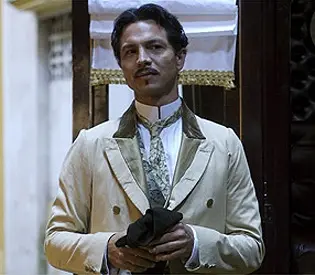
Why is Urbino’s routine given so much narrative attention? In the context of our discussion of love, the detailed account of his routine reveals more than just his character: it tells us something about the dynamics of their marriage. More specifically, it indicates that he is the one who sets the rhythm of their domestic life, while Fermina has a secondary, supportive role. Throughout the first part of the book Fermina stays largely in the background, and we are not given any corresponding account of her own daily routine and personal priorities beyond her role as Urbino’s wife. Instead, we encounter her primarily through the everyday ways in which she cares for her husband, from preparing his lemonade and selecting his clothes to helping him dress:
“Fermina Daza had chosen her husband’s clothes according to the weather and the occasion, and laid them out for him on a chair the night before so they would be ready for him when he came out of the bathroom” (p. 26).
Fermina did not stop at picking out and laying out her husband’s clothes. Gradually, she also began to help him dress, “and finally to dress him”—an act that started “for love” but the past five years had become a necessity, as his advanced age with all the bodily decay that accompanies it (loss of hearing, faltering steps, eroding memory) made it difficult for him to complete basic everyday tasks. Bathing was another one of these tasks, a ritual also taken over by his wife, who bathed him “just as if he were a newborn child” (p. 30). In fact, the whole dynamic of their relationship in the past five years increasingly reinforced Fermina’s maternal role to the extent that she tended to him like a mother caring for her baby:
“After bathing him, Fermina Daza helped him to dress: she sprinkled talcum powder between his legs, she smoothed cocoa butter on his rashes, she helped him put on his undershorts with as much love as if they had been a diaper, and continued dressing him, item by item, from his socks to the know in his tie with the topaz pin” (p. 31).
There are a lot of meanings to unpack here, as my teenage self is tugging at my sleeve to remind me how deeply personal all this is to me. First, there is the business of picking out your husband’s clothes. This is something my mom did for my dad as I was growing up, and I can still remember him yelling from the bathroom, “socks!” or “vest!” when she had forgotten to provide the full outfit. I still don’t know whether she did this out of love or simply because she wanted to make sure he was properly dressed. What unsettled me was not simply his dependence on her—that was none of my business—but how deeply gendered it was: he relied on her for the most basic aspects of his everyday life, while she was expected to anticipate and take care of his needs, as well as ours. Was this love? Maybe for them it was. Maybe my mom was socialised to believe that this is what is expected of her and my dad appreciated it as a gesture of love for the same reason. Maybe she grew tired of mismatched outfits and decided to take things into her own hands. Who knows. As a young girl, what was nagging at me was the gendered nature of this “expression of love”. Is this what I was expected to do for my husband to express my love? Is this what women do in a relationship?

Many years later, as I witnessed my parents go through illnesses and hospital stays my attitude softened a bit and became more nuanced. I saw my mom looking after my dad through two cancers, and my dad looking after my mom through her battle with the disease until she died, and then I had to care for my dad and my grandmother when they were incapacitated by illness. I can now say with some certainty that there is perhaps no stronger expression of devotion and self-sacrifice than tending to the everyday needs of a loved one who is gradually reverting to the helpless state of a “senile baby” (p. 26).
At the same time, though, I am also familiar with the great physical, emotional and financial strain experienced by those who provide unpaid, informal care. It is demanding work that leaves little room for long breaks and requires a constant state of alertness and self-sacrifice. It is work done for love, but at a personal cost. And it is performed mostly by women, who are thought to be more “naturally” nurturing and empathetic.
Bearing all this in mind, I returned to the text to look more closely at how it portrays Fermina’s role in caring for her husband. Why does the story begin with them in old age, when affection inevitably involves some degree of nursing and care—usually provided by the wife to the husband? And why does the text emphasise Urbino’s decline in such detail? Fermina may have “lost the doe’s gait of her younger days” (p. 21) but at seventy-two she is “still slender and erect” with “resilient hands” and can still rock a “loose-fitting silk dress” on high-heeled shoes (p. 25). Urbino, in contrast, is repeatedly described as old and frail, like a fading photograph of his younger self: hard of hearing, unable to walk without a cane, and even incapable of urinating in a straight line — a sign of masculinity that in his youth had won him “contests for marksmanship in filling bottles,” but which, “with the ravages of age” was “not only decreasing” but even “becoming oblique and scattered,” until it turned “into a fantastic fountain, impossible to control, despite his many efforts to direct it” (p. 30). Urbino is able to maintain his dignity mainly because of his wife’s attentiveness.
And this becomes even more obvious at Olivella’s gala.
At this grand event, which is their last joint social appearance before Urbino’s tragic death, Fermina is portrayed as an affectionate companion who keeps an eye on her husband to make sure he will not embarrass himself by falling asleep during the meal or spilling soup on his lapel (p. 35). During lunch, she “sat next to her husband, as she always did” and later, during the concert, she kept “an eye one him as she always did” (p. 37). When she mistook his attentiveness to the music for introspection and sadness caused by Jeremiah’s death and the revelations of his letter, she “stopped eating and put her earthly hand on his” urging him to not think about it anymore (p. 37). She is in a constant state of alert, like a mother looking after her young toddler.
What do all these small acts of care tell us? Up to this point in the story, we may not have a definitive understanding whether their bond is love or convenience, and whether the theme of love and romance serves as a vehicle or metaphor for other discussions, but we cannot doubt Fermina’s genuine affection for her aging husband. For all intents and purposes, in the context of the story and the social expectations within Fermina and Urbino’s world, she appears to love him. After all, like Golde, for fifty years she laid out his clothes, gave him children and ran his household. If that’s not love what is?
“For years Fermina Daza had endured her husband’s jubilant dawns with a bitter heart” (p. 26)
But if Fermina’s love is made visible through her acts of care for her husband, it is only natural to ask how Urbino responds to her needs and desires. What do we know about the love she receives from him? Is the marriage sustained exclusively through her own acts of affection? Does Urbino ever accommodate her wishes — or does the text even give us a sense of what these wishes may be?
The answer is: surprisingly little. Throughout the first part of the novel, Fermina’s own desires remain largely invisible. The one clear glimpse we are given comes from the early years of their marriage, and it is as simple as it is revealing: she wants to sleep. And even this small, private desire is repeatedly disregarded by a self-absorbed husband who invades her morning peace, because he needs her awake.
Let’s look at exactly what the text is telling us: Urbino wakes up at the crack of dawn, “with the innocence of a newborn,” happy that he has won one more day; Fermina, on the other hand, clings “to the last threads of sleep in order to avoid facing the fatality of another morning full of sinister premonitions” (p. 26, 27). We could unpack the various meanings of these statements and what they tell us about Urbino’s and Fermina’s personalities, but for the purpose of this argument it boils down to a simple fact: Urbino likes to wake up with the roosters and Fermina wants to sleep in.

However, Urbino refuses to respect his wife’s desire to sleep. Soon after waking he would cough, a noise that seemed to serve no purpose other than to wake her up too; he fumbled for the slippers that were supposed to be right next to the bed; and he would “grumble just to annoy her” (p. 27). Now, did he make these noises out of malice? Was his conscious intention to annoy his wife? After all, he was not left to guess his wife’s feelings on the matter. Whenever his fumbling forced her to wake fully and tell him where his slippers were, she made those feelings quite clear, cursing in a rage: “The worst misfortune in this house is that nobody lets you sleep” (p. 27). Moreover, the narrator makes it clear that none of Urbino’s morning noises were indispensable, and Fermina knew it “full well”: “he made them on purpose, although he pretended not too” (p. 27). The answer is much simpler: he just did not care what she wanted; he only cared about what he needed: “he never needed her awake and lucid as much as he did during those fumbling moments” (p. 27).
The narrative seems to approach this passive-aggressive stalemate as one of marriage’s “trivial everyday miseries” and “trivial games” that are part of “the many dangerous pleasures of domestic love” (p. 26, 27). Just as he made the noises on purpose “although he pretended not to,” she pretended to be asleep although she was awake (p. 27). The narrator tells us what “the truth was”: “they both played a game, mythical and perverse, but for all that comforting” (p. 27). However, was it a game for her? Or are we seeing a typically male interpretation of what may actually be female frustration with male entitlement—a frustration the narrative itself risks trivialising?

Having explored the dynamic of their relationship in this context, we can go back and revisit the soap incident, which now takes on a different dimension. Although it is introduced in the text as “one of those trivial games” (p. 27), which are not that trivial if seen through a gendered lens, the sheer duration and intensity of the conflict suggests that neither Urbino nor Fermina experiences the incident as trivial. In fact, when they revisited the incident later on in their old age, “neither could believe the astonishing truth that this had been the most serious argument in fifty years of living together” one that had made them both “want to abandon their responsibilities and begin a new life” (p. 29).
In this light, it becomes obvious that their fight it is not really about soap: it is about Fermina’s failure to fulfil one of her many invisible responsibilities that keep Urbino’s domestic life and rigid personal routine functioning. It strikes deep into the core of her essential duties, even at that early stage of their relationship, when she was already picking out and laying out her husband’s clothes. In short, it is perceived as a personal attack, an implied accusation that she is not doing her job. And given the emphasis on Urbino’s obsession with routine, consistency and cleanliness, the absence of soap becomes far more than a “trivial” domestic inconvenience.
“Only God knows how much I loved you.”
Until this point in the story we have gotten a glimpse into Fermina and Urbino’s married life mainly through the gendered social roles they are expected to fulfil. Their love, too, has been considered largely in this light. And although Fermina’s love for her husband has been established, we still have little sense of how Urbino feels about his wife, beyond his dependence on her for his everyday comfort.
Their final joint social appearance before Urbino’s death brings these roles into their clearest focus: at Olivella’s gala Urbino has a seat at the centre of “the table of honour” right next to the Archbishop and engages with important social figures such as the Archbishop and the mayor while Fermina, as I discussed above, takes on the role of the attentive wife, keeping an eye on him to ensure that he does not fall asleep or embarrass himself. But soon, these roles fall away, and we get a glimpse of the people beneath them—their raw, unguarded selves, brought to the surface by the imminence of death.
The couple leave the gala early, so that Urbino’s routine of a “sacred siesta” and an afternoon lemonade goes uninterrupted, before he has to get ready for Jeremiah’s funeral (p. 39). And then, tragically and unexpectedly, in the middle of his carefully regimented existence, Dr. Urbino dies. It is a ridiculous death (he falls from a ladder while trying to capture his parrot) but the rest of the scene counterbalances his comic way of falling with an emotionally heart-wrenching description of the final moments of his life. It seems that the question of what love looks like in this marriage is not quite settled yet, as the man whose feelings for his wife have been so conspicuously absent from the story so far gives us a most heartfelt declaration of love. Dead to this life “but still resisting death’s final blow,” he clings to life long enough for his wife to have time to come to him. And Fermina, having heard the servant’s scream, drops the tasting spoon and runs to the garden “screaming like a madwoman” to find her man half-dead lying in the mud on his back (p. 42):
“he looked at her for the last and final time with eyes more luminous, more grief-stricken, more grateful than she had ever seen them in half a century of a shared life, and he managed to say to her with his last breath: “Only God knows how much I loved you” (p. 42-3).
It is within that a brief moment that the story condenses Urbino’s feelings for his wife. We are allowed only a glimpse of it in the final throes of his death, with no time for Fermina to process his heartfelt declaration, let alone respond to it. And yet we find out that she has been carrying the same love, as she prays to God to give him just enough time for her to tell him that she loved him too:
“She prayed to God to give him at least a moment so that he would not go without knowing how much she had loved him despite all their doubts, and she felt an irresistible longing to begin life with him over again so that they could say what they had left unsaid and do everything right that they had done badly in the past.”
In her last goodbye, before they close the coffin, Fermina Daza as a last show of devotion, “took off her wedding ring and put it on her dead husband’s finger (…) covered his hand with hers” and reassured him that they would meet again soon (p. 47).

And just when we think that we have settled the question of love, the story introduces yet another complication. Urbino has been dead for less than a day, and Fermina is seeing off the last guests, when she catches sight of Florentino Ariza, dressed in mourning, standing “tremulous and dignified” in the middle of the empty room, there to repeat once again his “vow of eternal fidelity and everlasting love” (p. 50).
Who is this new character, and why did Fermina reject him? What does their relationship make us reconsider about love? Could love be more than the subject of the story—could it be a way of exploring something else?
I will return to these questions after I have made some more progress with the story.
Join me next week to explore another theme that we cannot escape in the first part: the suffocating stench that permeates the city and how it relates to the social geography mapped out in the novel.
Until next time, happy reading! 📖 🤓
*All page numbers refer to the 2024 Penguin Books edition.


Comments